
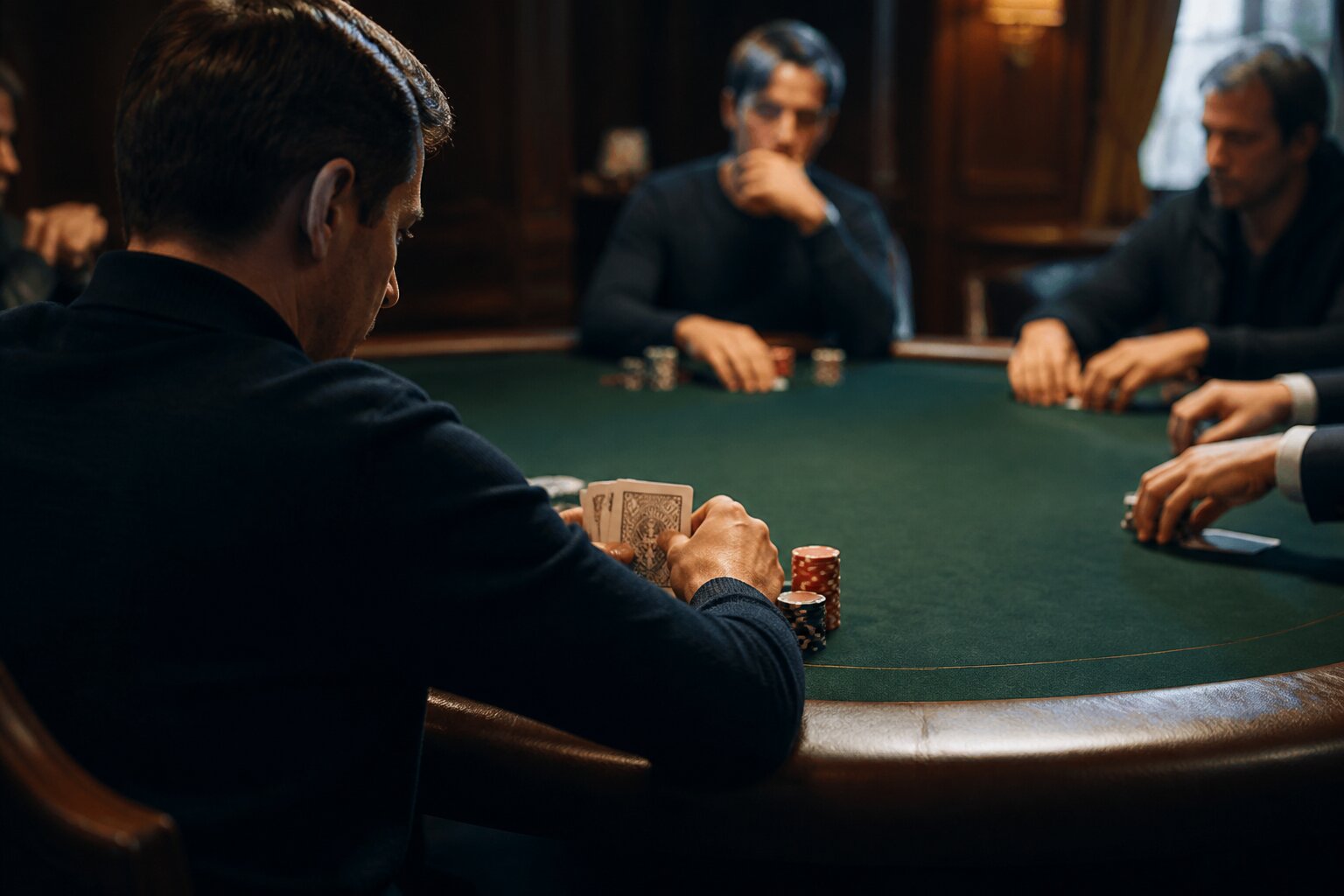
Ever sat at a poker table and wondered what it really means to be "under the gun"? If the phrase has come up and you are not sure how this early position changes your decision-making, you are in the right place.
This article explains the under the gun seat, the practical effects it has on play, and how to approach early action with clearer thinking. Read on and you will finish with concrete ideas you can use next time you are first to act.
What Does Under the Gun Mean in Poker?
Under the gun refers to the player seated immediately to the left of the big blind. That player is the first to act in the opening betting round after the cards are dealt.
Being first means making a choice without seeing anyone else’s reaction. You may fold, call the big blind, or raise, and your decision will shape how the rest of the table responds.
Because you act before other players reveal information through their bets, this seat is widely regarded as one of the more demanding positions. It requires a tighter starting-hand selection and a clearer plan for how a hand will proceed if you commit chips.
How Does Under the Gun Position Affect Gameplay?
Acting first changes the shape of a hand. You must account for the possibility that several opponents remain to act behind you, which increases the chance of facing raises or calls from stronger hands.
This uncertainty affects both the hands you choose to play and how you size bets. For example, small suited connectors that work well in late position are often poor choices under the gun, because they perform worse against multiple callers and can be dominated by higher cards.
Conversely, premium hands such as high pairs and strong broadway combinations keep value in this seat. They withstand pressure from raises and play well against multiple opponents. Thinking in terms of how a hand fares against several ranges, not just one opponent, helps you adapt your style when you are first to act.
If you are unsure how the table tends to react, prioritise hands that let you control the pot size and are easy to describe in later streets.
Rules to Follow When Playing Under the Gun
When seated under the gun, favour starting hands that are likely to win in multiway pots and that do not rely on complex post-flop play. Hands such as top pairs, high pocket pairs, and strong suited broadways are often the most suitable.
Discipline is essential. Folding marginal hands early saves chips and preserves your ability to play better spots later. It is also useful to observe how opponents behave—tight tables allow you to open a bit more, while very loose or aggressive tables make under the gun play more costly.
Bet sizing should reflect the range you represent. When you raise from under the gun, choose amounts that discourage loose calls but still commit value for hands that deserve it. Overly small raises invite multiway action, which usually favours the callers rather than the raiser from this seat.
Keep a practical bankroll approach. Play at stakes where your decisions under early action do not threaten your overall funds, and step back if the session feels emotionally driven or if you are playing outside your comfort zone.
Key Differences Between Under the Gun and Other Early Positions
Under the gun is the earliest seat to act after the blinds, and the players who follow to the left are also classed as early positions. The key distinction is order of action: each seat acting after you gains extra information because they can react to your move.
That extra information changes strategic choices. A player one seat to your left can widen their range slightly because they see your action first. Two seats over will have still more context, and so on. Thus, while all early positions require selectivity, the farther you are from the blinds the more flexibility you gain.
Another practical difference is pot control. Acting first often means you are defending a smaller relative stack of equity in the pot, so hands that depend on delicate post-flop manoeuvres are less valuable here than they would be later.
Understanding these subtleties helps you judge whether to fold, call, or raise based on how many players remain and how well your holding performs against broader ranges.
Common Misconceptions About Under the Gun in Poker
Many players believe that any hand dealt in early position is automatically weak. That is misleading. A hand’s strength comes from its inherent cards and how it fares against multiple opponents, not just from the seat you occupy.
What changes with under the gun is the level of selectivity required. You still get good hands in this seat—pocket aces, kings, queens, and strong ace-king combinations are still excellent—but you must consider their performance when faced by several callers or a re-raise.
Another myth is that under the gun play is always passive. While caution is common, a well-timed raise with a genuine value hand can protect your equity and define ranges. The better approach is to match aggression to the structure of the hand and the tendencies of the table, rather than following a rigid template.
Best Practices for Making Early Decisions Under the Gun
Evaluating how a hand performs against multiple potential opponents is a useful habit. Hands that make top pair on the flop but are vulnerable to overcards or domination should be treated carefully. Premium pairs and strong broadway combos remain practical because they withstand aggression and have clear value lines.
Pace your decision-making. Taking a moment to picture likely reactions from the players yet to act helps avoid snap calls that can lead to difficult post-flop spots. Look for patterns: if a particular opponent frequently re-raises, fold more marginal hands and tighten your opening range.
Balance is important. While under the gun calls for selectivity, occasional controlled aggression with hands that block opponents’ strong holdings can be effective. Imagine how the hand might play out on the flop and choose actions that give you multiple reasonable paths going forward.
Mistakes to Avoid When Playing Under the Gun
One frequent error is playing too many marginal hands. Because you have little information, entering the pot with speculative holdings increases the chance of being outplayed on later streets.
Another mistake is ignoring position entirely. Treating under the gun as if you were in late position leads to problematic calls and bloated pots. Similarly, overcommitting to a weak hand in the hope it improves is seldom profitable and can deplete your stack.
Reactivity is also a risk. Responding to a previous loss by widening your range or making larger bets usually compounds mistakes. Instead, return to a clear plan based on hand quality and table context, and preserve your ability to make better choices later.
Why Is Under the Gun Position Important in Poker?
The under the gun seat matters because it highlights how position influences decision-making across a hand. Acting first forces you to be selective, to think in terms of ranges rather than single hands, and to manage pot size intentionally.
How you handle this seat says a lot about your overall approach. Tight, thoughtful play here tends to preserve chips and minimise unpleasant multiway confrontations, while careless play can lead to repeated difficult situations.
Keep an eye on your limits and the flow of the table, and you will find that disciplined early-position play becomes one of the more reliable pillars of a solid game. If you want to sharpen your skills further, review hands where you acted first and note how different actions changed the hand’s outcome.
**The information provided in this blog is intended for educational purposes and should not be construed as betting advice or a guarantee of success. Always gamble responsibly.