
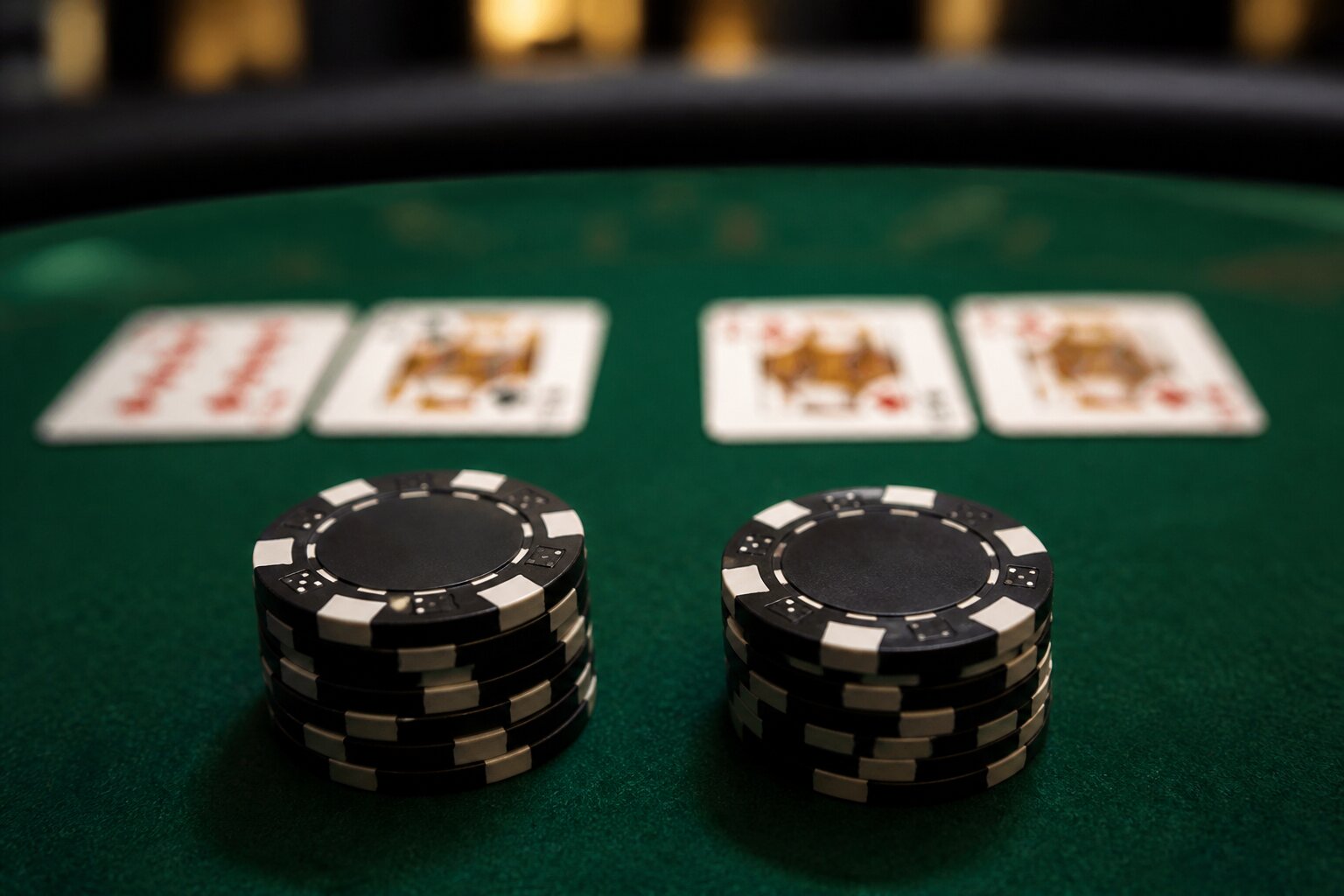
Deciding how many hands to play at the blackjack table can change both the pace of your session and how quickly your bankroll moves. Some players concentrate on a single hand and deliberate over each decision, while others prefer the busier feel of playing two hands at once.
This article compares the two approaches so you can pick the one that fits your style and budget. We’ll look at play dynamics, the effect on your chances, table etiquette, and practical bankroll considerations to help you decide.
Curious which suits you? Read on and you’ll have a clearer idea by the time you reach the final section.
Understanding How Blackjack Is Played
Blackjack is straightforward in its aims: beat the dealer’s hand without exceeding 21. Each player and the dealer receive two cards, and values are simple — number cards at face value, face cards as 10, and Aces counting as 1 or 11 depending on the hand.
Players choose to hit or stand, and in many games there are options such as doubling down or splitting pairs. Dealers follow fixed rules, typically hitting until they reach 17 or more, which creates a predictable structure for every round.
Knowing these basics makes it easier to see why the number of hands you play matters mostly for pace and risk, not for changing the underlying mathematics of the game.
What Are the Differences Between Playing One or Two Hands?
Playing one hand focuses your attention on a single decision tree. There’s more time to think about strategy, and fewer variables to track. It’s well suited to players who prefer a measured pace or are still learning the finer points of play.
Playing two hands increases the number of choices you make each round and doubles the amount staked. That intensifies the action and can make sessions feel livelier, but it also accelerates how quickly your balance changes. The key trade-off is between engagement and volatility: two hands can be more absorbing, one hand can be steadier.
If the idea of increased involvement appeals to you, try it in small stakes sessions first. That lets you see how you manage the additional decisions without risking too much of your budget.
Impact on the Odds: Does Hand Count Make a Difference?
The short answer is no — playing extra hands doesn’t alter the house edge. Each hand is treated independently under the game rules, so the long-term odds stay the same whether you’re playing one hand or multiple hands.
What does change is the variance. Doubling your wagers by playing two hands means your results will swing more widely in a given period. You’ll experience wins and losses more rapidly, but the expected return relative to the amount wagered is unchanged.
Understanding that distinction helps you decide how many hands to play based on how much fluctuation you are comfortable handling, rather than on any expectation of improved odds.
Table Dynamics: How Does Playing Multiple Hands Affect Other Players?
Taking more than one seat at the table can alter the social and practical flow of a game. Extra hands reduce available spots, which can matter at busy tables, and they add decisions for the dealer to process each round, potentially slowing the game.
Most dealers and players won’t mind if the table is quiet, but at crowded times it’s courteous to check with the dealer before occupying multiple spots. A brief word keeps play friendly and avoids slowing things down when others are waiting.
Keeping considerate behaviour in mind makes for a better experience for everyone, regardless of how many hands you play.
Why Do Some Players Choose to Play Two Hands?
Players opt for two hands for different reasons.
Common motives include:
- enjoying the increased engagement of making more decisions each round,
- liking to see more cards in play so the table feels livelier,
- preferring the rhythm and pace that a busier session provides.
These preferences are personal and about how the game feels rather than about getting an edge. Playing two hands changes the experience and the tempo, but it does not alter the underlying odds or the house edge.
If you try it and find it is not for you, switching back to a single hand quickly restores a calmer pace and simpler decision-making.
Common Myths About Playing Multiple Blackjack Hands
There are a few persistent myths about multi-hand play. Two common ones are:
- That playing more hands at once improves your overall chances of winning.
- That handling several hands gives a player more control over outcomes.
Both of these are mistaken.
Each hand is dealt and resolved under the same rules and with the same underlying probabilities. The expected return on each hand does not change simply because you are playing them in parallel. Any appearance of an advantage usually comes down to short-term variance or selective memory rather than a genuine change in expected results.
Playing multiple hands does change the game in other, important ways. It increases the speed at which you put money at risk and so raises short-term volatility. It can make it harder to follow basic strategy consistently and may lead to more errors or poorer decision making if you are distracted or rushed.
Treat stories of guaranteed success with scepticism, and keep the focus on the mathematics rather than anecdotes. If you choose to play more than one hand, be mindful of bankroll management and your own limits, because the risk of larger, quicker swings is real.
Does Playing Two Hands Increase Your Chance of Winning?
This section connects directly to the myths covered above: no, playing two hands at once does not increase your probability of winning per hand. Because the hands are independent, each carries the same chance of beating the dealer as it would when played alone.
What changes is the number of bets you place each round. That can amplify short-term results — both good and bad — but it doesn’t change the long-term expectation for each unit wagered.
If you encounter systems or strategies promising significantly better returns simply by playing extra hands, treat them cautiously; they overlook the fundamental fact that each hand’s edge remains constant.
Managing Your Bankroll When Playing One vs Multiple Hands
Playing multiple hands affects how quickly you use your funds. With two hands, you place two bets every round, so a session of the same length will cost more than if you played a single hand each time.
A practical approach is to set a session budget and think in terms of bets per round rather than total time. That helps you control how much you risk relative to the entertainment you expect. Some players choose to lower their stake per hand when playing more hands so the total exposure per round stays manageable.
If you feel your play is becoming pressured or you’re tempted to chase losses, it’s sensible to take a break and reassess. There are confidential support services that can help if gambling ever starts to feel out of control.
Which Option Is Best for Beginners?
Beginners usually find one hand easier to handle. It reduces the decisions to learn and gives more space to observe dealer patterns and table pace. That calmer approach helps build confidence and familiarity with common situations.
Once comfortable with the rules and basic strategy, trying two hands for brief stretches can be a natural next step. Doing so in low-stakes play lets you assess whether the faster pace and extra decisions suit your temperament without stretching your budget.
Choose the route that makes the game enjoyable and understandable for you; there’s no obligation to change your style once you find what works.
Final Thoughts: Should You Play One or Two Blackjack Hands?
Choosing between one or two hands comes down to what you want from the session. Two hands bring more action and faster swings; one hand gives you time to think and a steadier experience. Neither option changes the fundamental odds of the game, so pick the approach that matches your comfort with variance and the level of involvement you prefer.
Keep your spending limits clear and stay aware of how the pace of play affects you. With a sensible budget and an understanding of what each style offers, you’ll be able to enjoy your time at the table and make the choice that fits you best.
**The information provided in this blog is intended for educational purposes and should not be construed as betting advice or a guarantee of success. Always gamble responsibly.