
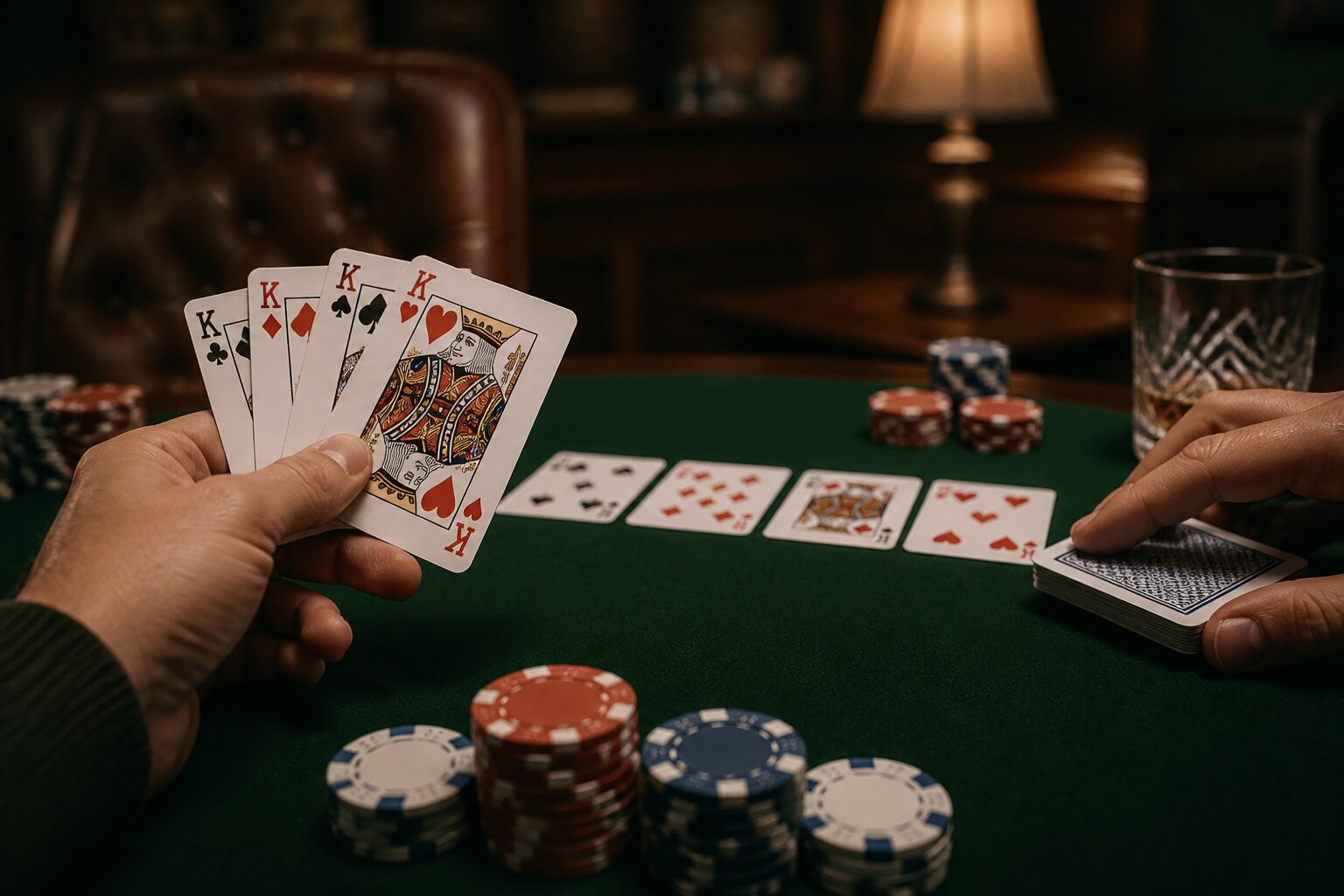
Ready to take your poker night up a notch? HORSE Poker blends five distinct poker variants into one session, testing memory, adaptability and strategic range.
If you’re used to Texas Hold’em, this format shakes things up by cycling through different rules and hand priorities. Keep reading to learn how HORSE works, what each game involves and how rounds rotate so you can feel confident at the table.
What Is HORSE Poker?
HORSE Poker is a mixed-game format made up of five different poker variants. The letters spell out the games in sequence:
H – Hold’em
O – Omaha Hi-Lo
R – Razz
S – Seven Card Stud
E – Seven Card Stud Eight or Better (Stud Hi-Lo)
Players move through these games in order, usually with fixed-limit betting for each round. Because each variant uses different rules and, in some cases, different winning criteria, success requires familiarity with all five formats and an ability to switch strategy quickly.
This rotation makes HORSE a good test of overall poker skill, rewarding players who can read situations and adapt as the table changes. The next section explains how a typical session flows so you know what to expect when you sit down.
How Do You Play HORSE Poker?
A HORSE session cycles through the five variants, with each game played for a predetermined number of hands or a set time interval. The dealer or the software will announce the change when you move from one variant to the next, so players must stay alert to the current rules.
Most HORSE games use fixed-limit betting to keep stakes consistent across the different variants. That means bet and raise sizes are limited to specific amounts in each betting round. Knowing the structure helps you judge pot odds and position more reliably across the rotation.
Because the variants have different objectives—Razz rewards the lowest hand while Hi-Lo games can split pots—your approach at the table shifts as soon as the game changes. A brief note on conduct: play within your budget and the game’s rules, and ensure you meet the minimum age requirement before joining a real-money session.
Horse Poker Rules Explained
HORSE follows fixed-limit betting and a fixed sequence of games: Hold’em, Omaha Hi-Lo, Razz, Seven Card Stud, and Stud Hi-Lo. The order does not change during the cycle.
Each poker variant keeps its own dealing and showdown rules. For example, in the Hi-Lo variants the pot may be split between the highest hand and a qualifying low hand; in Razz the lowest five-card hand wins outright. These differences affect hand selection, betting frequency and how you evaluate opponents’ ranges.
Card rooms or online platforms sometimes adjust rotation length or small table procedures, so check house rules before joining. Finally, make sure you’re aware of any local age or identity requirements needed to participate in real-money play.
Now that you know the framework, let’s look at the individual games that make up HORSE so you can see how each one influences strategy.
What Card Games Make Up HORSE Poker?
Each variant brings a distinct flavour to the rotation and creates different strategic challenges. Below are the five core games and the essentials you will want to understand for each.
Hold’em
Players are dealt two private cards and use up to five community cards to form the best five-card hand. The familiar structure means position and reading opponents are key. Because Hold’em appears first in the rotation, it often sets the tone for table dynamics.
This game rewards strong pre-flop selection, awareness of bet sizing and the ability to adapt as community cards appear. Bluffing and value-betting are central skills, but they must be used in context with the rotation and opponents’ tendencies.
Omaha Hi-Lo
Players receive four private cards and must use exactly two of them with three community cards. When a qualifying low exists, the pot is split between the highest and lowest hands. Hand selection is more constrained than in Hold’em, so starting-hand combinations and the ability to scoop both halves of the pot matter greatly.
Because you must take exactly two hole cards, plays that look strong in high-only Omaha can be weak in Hi-Lo. Recognising when the board offers a realistic chance to win both the high and the low is a major advantage.
Razz
Razz is a lowball version of Seven Card Stud where the lowest five-card hand wins. Straights and flushes do not count against a low hand, and aces are low. Because the objective is to minimise hand strength, early street information from face-up cards strongly influences decisions.
Patience and the ability to fold hands that have been priced out are important. Reading exposed cards and opponents’ folding patterns can provide a strong edge in this variant.
Seven Card Stud
Each player receives a mix of face-up and face-down cards across several betting rounds with no community cards. The best five-card high hand wins. The presence of exposed cards means you can make precise reads on opponents’ likely holdings, and starting hands behave differently than in community-card games.
Stud rewards attention to the visible cards and to how betting changes with each street. Hand development across the rounds and recognising when an opponent is on a draw are key strategic elements.
Eight or Better (Stud Hi-Lo)
This is a split-pot Stud variant where the low hand must consist of cards ranked eight or lower to qualify. Pots can be divided between the highest hand and the lowest qualifying hand, which creates situations where a player with a mediocre high might still have a valuable low, so paying attention to potential scoops is important.
Because both high and low can win, players should consider board texture, the visible cards and how many opponents can make a qualifying low. Strategic adjustments between playing for pure high and pursuing a scoop are common.
With those rules clear, the next section explains how and when the rotation between these games occurs.
How Are HORSE Poker Rounds Rotated?
Rotation is strictly ordered and repeats: Hold’em, Omaha Hi-Lo, Razz, Seven Card Stud, then Stud Hi-Lo. Sessions typically use either a hand-count rotation—where a fixed number of hands are played in each variant—or a timed rotation, with switches every set number of minutes.
The announcement of a change is usually made by the dealer in live games or by the software online. Because strategy and hand value can shift instantly with the new variant, players must adapt quickly when play moves on.
House rules can vary on how long each segment lasts and on specific procedural details, so it’s sensible to confirm those before joining. Understanding the rotation helps you prepare mentally and plan which variants you might wish to avoid or target, depending on your strengths.
Next, we’ll compare HORSE to single-variant poker to highlight what makes mixed games distinct.
Common Differences Between HORSE Poker & Regular Poker
The main difference is variety. Regular poker sessions typically stick to one variant from start to finish, giving a steady rhythm and consistent hand rankings. HORSE, by contrast, forces players to adjust to multiple rule sets and objectives within a single session.
Betting structure is another contrast. HORSE is commonly run as fixed-limit, which constrains wager sizes and emphasises hand selection and pot control. Many single-variant games, particularly No Limit Hold’em, allow a much wider range of bet sizing and aggression.
Finally, the winning condition itself can change between rounds in HORSE. Some games aim for the highest five-card hand, others reward the lowest, and some split pots. That variety rewards players who can shift gears and read different table dynamics as they appear.
If you enjoy switching strategy regularly and testing a broad skill set, HORSE offers a condensed way to do that. The section that follows outlines the key reasons players seek out mixed-game formats.
Why Choose HORSE Poker? Benefits & Appeal
Players choose HORSE when they want a session that exercises different skills rather than repeating one pattern. The format encourages a wider knowledge of poker theory—from value extraction in Hold’em to board-reading in Stud and low-hand construction in Razz.
Because exposure of cards varies between games, observational skills and memory become especially valuable. The rotation also makes for varied table conversations and tactical shifts, which many players find mentally engaging.
For those looking to broaden their play, HORSE provides a practical classroom: you see the same opponents across multiple contexts and can evaluate strengths and weaknesses that aren’t visible in single-variant play.
If you enjoy learning at the table and prefer sessions that require regular adjustments, HORSE delivers a comprehensive test of overall poker ability. Read on for answers to common questions players ask before joining a mixed-game table.
FAQs About HORSE Poker
Below are answers to questions newcomers often raise when considering HORSE Poker.
Do I need to know all five games to play HORSE Poker?
A working knowledge of each variant is important because the rotation moves through all five. Basic familiarity helps you make sensible decisions when a game changes.
How long does each round in HORSE Poker last?
That depends on the organiser. Rotations can be based on a set number of hands or a time limit such as 15–20 minutes. Check the house or tournament rules to know how frequently the game will switch.
Is HORSE Poker played online or just in casinos?
You can find HORSE in both live card rooms and on many online poker platforms. Verify the operator’s licensing and rules before depositing funds or joining a table.
What is the minimum age to play HORSE Poker in the UK?
You must be at least 18 years old to play real-money poker in the UK.
Is HORSE Poker suitable for beginners?
Beginners can enjoy HORSE, but it helps to learn the basics of each variant first. Taking time to study the differences between high, low and split-pot games will make sessions more rewarding and less confusing.
If you’re ready to try HORSE, start by observing a few rotations or joining a low-stakes table until you feel comfortable with the pace and the rule changes. That way you’ll get the most from this varied and demanding format.
**The information provided in this blog is intended for educational purposes and should not be construed as betting advice or a guarantee of success. Always gamble responsibly.