
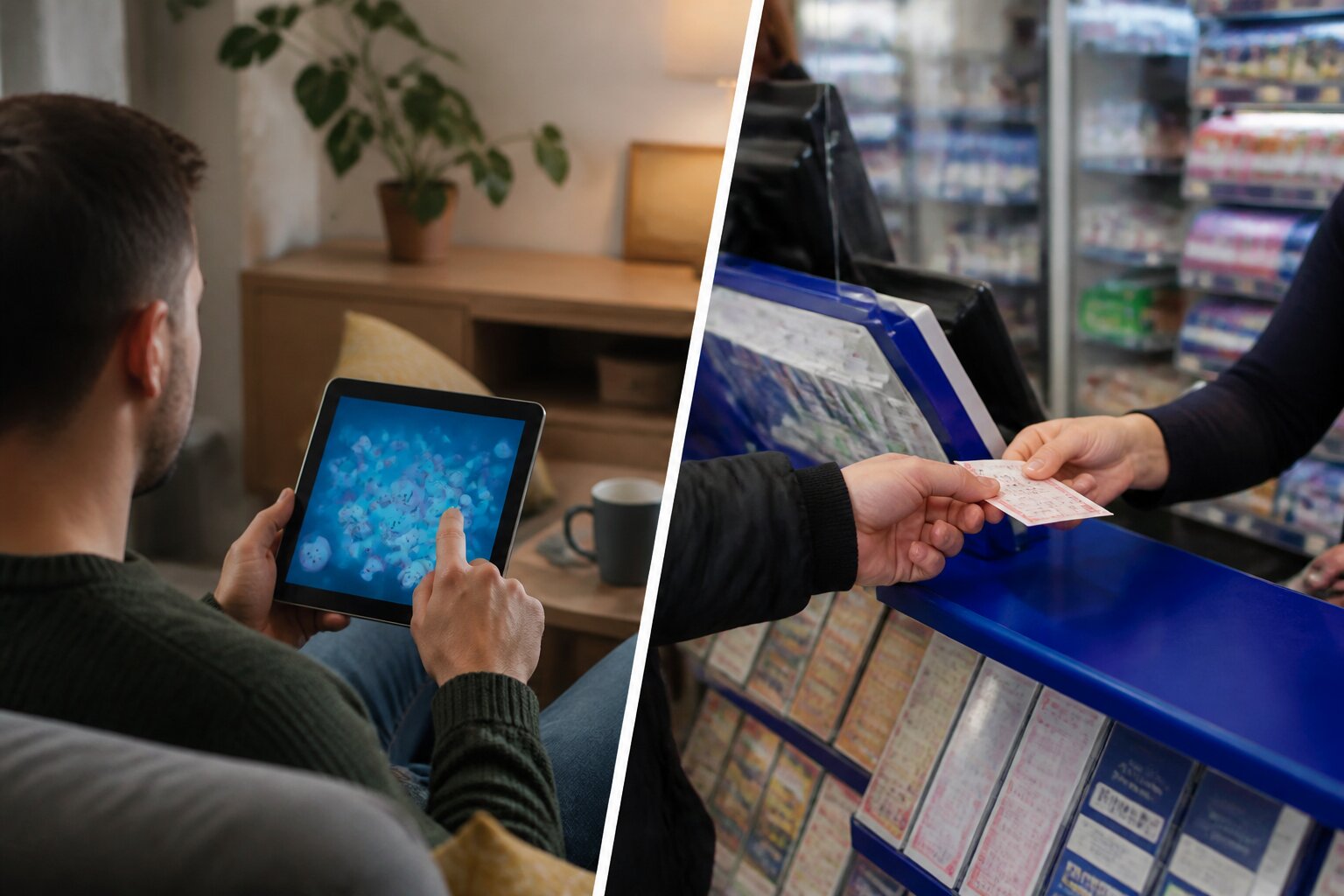
Ever wondered whether you should buy your lottery tickets in the shop or online? With so many options available nowadays, it’s easy to feel a bit lost. Making the right choice can make playing the lottery more convenient and secure.
Both methods have distinct advantages and practical differences — from how you pay to how you claim prizes. This guide walks through the main contrasts so you can decide which suits you best.
How Does the Buying Process Differ Online and In-Store?
Buying a ticket online usually starts with creating an account on a licensed platform. You enter basic personal details so the operator can confirm you meet age and identity requirements. After selecting a game and choosing numbers digitally, the purchase is completed using approved payment methods. Rather than a paper ticket, you receive a digital confirmation and any winnings are typically notified through your account or email.
In-store purchases are more tactile. You fill in a playslip, hand it to the cashier and receive a printed ticket as proof of purchase. That ticket is necessary when claiming prizes in person, so keeping it safe is important. Retail staff may ask to see ID if you appear under the age limit.
Both routes require verification to protect players and comply with regulations. Next, we’ll look at how each option compares for everyday convenience and access.
Convenience and Accessibility Compared
Online buying is available 24/7 up to the cut-off for a draw, which suits people with irregular schedules or limited mobility. It requires internet access and a device such as a smartphone or computer, and tasks like checking results or setting entries can be done from home.
In contrast, in-store purchases depend on the opening hours and location of authorised retailers. This can mean a trip to a shop, which might be quicker for those already out and about or for people who prefer handling transactions face to face.
Both methods have practical advantages depending on personal circumstances, and the choice often comes down to how you prefer to fit ticket buying into your routine. The next section explains how payments and security compare between the two.
Payment Options and Security Considerations
Online platforms typically accept debit cards and approved online payment services, and transactions are processed through encrypted systems that meet industry standards. Licensed operators carry out identity and age checks before allowing purchases, and monitoring is used to detect unusual activity. Account holders are encouraged to use strong passwords and to keep their login details private.
In-store, payment is usually by cash or card at the till, and proof of age may be requested. The printed ticket serves as the record of purchase, so its safekeeping is essential.
Both channels are subject to regulatory oversight designed to protect players and their funds. With that in mind, the next section covers how prizes and payouts are handled after the draw.
Are Prizes and Payouts the Same Online vs In-Store?
Prize amounts and odds are determined by the official game operator and apply equally regardless of where a ticket is bought. What differs is the way winnings are distributed. Online, smaller prizes are often credited automatically to the player’s account, while larger sums prompt additional checks and are paid by secure transfer or arranged withdrawal.
In-store tickets require the holder to present the paper ticket to claim winnings. Small prizes can usually be collected at a retailer; larger prizes may need a formal claim at an office and proof of identity.
Tax treatment is the same across purchase methods. With the payout details covered, the next section looks at the range of ticket types and game availability.
Claiming Winnings: Online vs Shop Procedures
When playing online, notifications about wins are sent to your account and small amounts are frequently paid directly into it. For higher amounts, extra identity verification will be requested before funds are released. With a physical ticket from a shop, the paper slip must be retained as evidence and presented when claiming at an authorised outlet or claims centre.
Tax Implications and Anonymity
In the UK, lottery prizes are not subject to personal tax, so the advertised prize is the amount received. Online play involves registered personal details and claims follow set privacy procedures. For modest in-store prizes, the ticket holder can remain effectively anonymous when collecting from a retailer, though larger claims require identification as part of formal procedures.
Ticket Types and Game Availability
Major draws such as Lotto, EuroMillions and Thunderball are offered both online and at retail outlets. Online platforms often provide extras like subscriptions, syndicate entry options and instant-play games, while shops may carry physical scratchcards and local or regional charity raffles that are not always available digitally.
Some online features include automatic entry for multiple draws and instant results for digital scratchcards. Retail outlets, meanwhile, can offer the immediacy of a paper ticket and access to local schemes. The choice of which ticket types to use depends on whether convenience, variety or a specific format is most important to you. Coming up, we’ll outline the protections and tools that help keep play safe.
Responsible Gambling Measures
Protective measures apply across both channels to help people keep play within their own limits. Online accounts commonly include features to set deposit, spend and play limits, as well as options to take a break or self-exclude for a chosen period. These controls are adjustable within the account settings.
In retail settings, self-exclusion and support are managed through national schemes and can be enacted by contacting participating outlets or central services. Staff training helps retailers recognise and respond to concerns, and formal exclusion programmes are available for those who need broader restriction.
Age checks are enforced for all purchases, with electronic verification online and ID checks in shops when appropriate. These safeguards are there to protect players and ensure compliance with regulations. The section that follows compares cost factors between the two purchase methods.
Which Option Is More Cost-Effective?
The face price of a standard lottery ticket is the same whether bought online or in-store. What can vary are ancillary opportunities: online subscriptions, syndicate bundles or multi-draw entries may be packaged for convenience or at a combined rate, and some retailers offer multi-draw tickets at their discretion.
Beyond these packaging options, online purchases can sometimes include small fees for payment processing or be bundled with promotional offers. In contrast, buying in person may save you from any digital charges but could involve spending on travel or a small purchase at the shop. These are practical costs rather than changes to the advertised ticket price.
Costs beyond the ticket price, such as travel to a shop or internet access, are personal considerations rather than differences in ticket pricing. Time and convenience also factor in: an online subscription removes the need to remember to buy each draw, while an in-store purchase gives you a physical ticket to check and keep.
Comparing the overall value means weighing these practical factors and the features you find most useful. Consider how often you play, whether you prefer a paper record, and whether small additional charges matter to your budget. The next section explains common risks and how to spot scams.
Potential Risks and Scams: What Should You Watch Out For?
Fraud can occur in either environment if people use unauthorised services. Online, fraudulent websites sometimes impersonate legitimate operators and may ask for payment without issuing a valid ticket. Emails or messages claiming a prize in a game you never entered are common phishing tactics; avoid clicking suspicious links or sharing bank details.
In shops, always buy from recognized retailers and request the printed ticket and receipt. Be wary of anyone offering to buy or sell lottery tickets second-hand or asking for unusual personal information.
Service fees should be transparent. Any extra charge for transaction handling must be shown clearly before purchase. If something seems unclear, contact the operator or retailer directly and report suspected fraud to the appropriate authorities. Having covered risks, the final section helps you decide which purchase method best fits your needs.
Choosing the Best Option for You
Selecting between online and in-store ticket purchases comes down to personal priorities. If you value convenience, automatic notifications and account controls, online platforms may be preferable. If you prefer a paper ticket and face-to-face transactions, a retail outlet could be the better choice.
Always use licensed providers and keep a record of your purchase, whether a digital confirmation or a printed ticket. Check the operator’s terms and privacy information so you understand how winnings are paid and how personal data is handled.
Whichever method you choose, make choices that fit your lifestyle and budget, and use the available protections to manage play. This approach helps ensure a straightforward, secure and well-managed lottery experience.
**The information provided in this blog is intended for educational purposes and should not be construed as betting advice or a guarantee of success. Always gamble responsibly.